A commercial building can appear to be operating normally while its water system is developing conditions that increase Legionella risk.
A little-used shower in an empty suite, a cold-water tank affected by heat gain or outlets left unused after an occupancy change can all alter how effectively the system is controlled.
For facilities managers, landlords and dutyholders, preventing Legionella growth is therefore not simply a water-hygiene task. It is an operational-control issue: understanding the water system, maintaining appropriate control measures, responding when building use changes and demonstrating that exceptions have been addressed.
This guide focuses on hot- and cold-water services in commercial buildings. Healthcare premises, cooling towers, spa pools and other specialist systems require additional or different control arrangements. HSE provides separate guidance for these higher-risk and specialist systems through its wider Legionella guidance.
The objective is to:
prevent or control Legionella risk through a site-specific regime covering water temperature or other appropriate control measures, water turnover, system cleanliness, monitoring and corrective action.
Why building use affects Legionella risk
Legionella bacteria occur naturally in water. The concern increases when conditions within man-made water systems allow them to multiply and contaminated droplets or aerosols are inhaled.
HSE identifies temperatures between 20°C and 45°C, stagnation, and the availability of nutrients such as scale, sludge, and biofilm as conditions that can increase risk. Temperatures outside that range should not, however, be treated as proof that a system is safe; effective control depends on the system as a whole.
As an illustrative example, consider an office where part of a floor becomes lightly occupied after a workspace reconfiguration.
The hot-water plant may continue to operate correctly, but several outlets are now rarely used. If the change in occupancy is not reflected in the water-hygiene regime, stagnation can develop in parts of an otherwise functioning system.
The weakness is not necessarily the boiler, tank or water supply.
It is the gap between how the building is now being used and how the water system is being managed.
That is why Legionella control needs to operate as a live process, not a risk assessment completed once and then filed away.
Start with the risk assessment, written scheme and clear responsibilities
Before deciding which checks are needed, the dutyholder needs to understand the system, who may be exposed and where conditions could support Legionella growth.
HSE’s L8 Approved Code of Practice, Legionnaires’ disease: The control of legionella bacteria in water systems, sets out the framework for assessing and controlling this risk. Its supporting HSG274 Part 2 technical guidance provides more detailed practical guidance for hot- and cold-water systems.
A suitable risk assessment should consider:
- the design and operation of the water system;
- people who may be particularly susceptible;
- storage and distribution arrangements;
- areas of low or intermittent use;
- temperature control;
- outlets that generate aerosols;
- maintenance condition;
- building occupancy and use; and
- foreseeable changes to the system.
Where the assessment identifies a foreseeable risk that requires control, the written scheme should explain how that risk will be managed.
It should make clear:
- which control measures apply;
- where monitoring takes place;
- how frequently it is carried out;
- who performs each task;
- what results are expected;
- what constitutes an exception; and
- what happens when control is not achieved.
A responsible person should be appointed to manage implementation of the control measures. That role does not replace the dutyholder’s underlying responsibilities; it provides named day-to-day responsibility for implementing the scheme.
A written scheme needs clear implementation responsibilities.
For facilities teams, that means knowing who maintains records, reviews exceptions, instructs remedial work, updates the scheme and confirms that corrective actions have genuinely been closed.
The HSE L8 Approved Code of Practice and HSG274 Part 2 technical guidance provide the principal reference points for those arrangements.
How to prevent Legionella growth through temperature control
Where temperature is the primary control measure in conventional hot- and cold-water services, HSE advises storing hot water at 60°C or above and distributing it so it reaches at least 50°C within one minute at outlets.
Cold water should, where possible, be maintained below 20°C.
These are system-control parameters rather than universal safe discharge temperatures.
Where thermostatic mixing valves (TMVs) control the temperature delivered to a tap or shower, monitor the relevant hot-water supply in accordance with the written scheme. The mixed-water discharge should not simply be raised to 50°C to satisfy the distribution target; scalding risk also needs to be controlled.
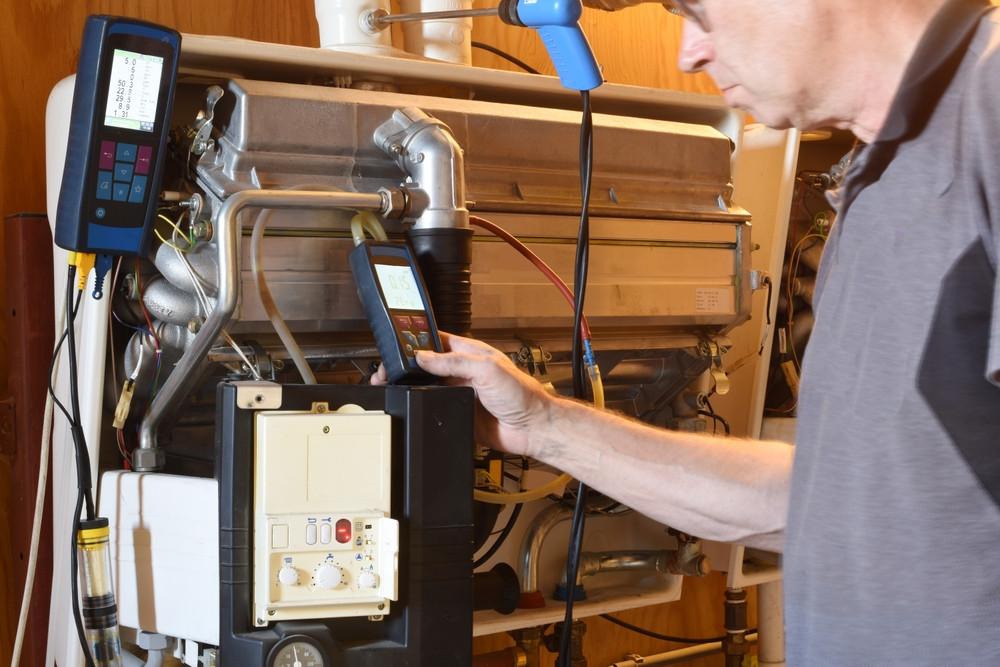
HSE advises measuring the hot-water temperature at the inlet to the TMV where these devices are fitted.
Specialist settings may have different requirements. For example, HSE identifies 55°C within one minute for hot-water distribution in healthcare premises, which is one reason this article should not be applied unchanged to healthcare environments.
For cold-water monitoring, HSE’s technical guidance uses below 20°C within two minutes of running the outlet as the control parameter at sentinel taps.
A sentinel outlet is generally an outlet selected to represent the performance of the distribution system, commonly one close to and one distant from the relevant tank or hot-water storage vessel.
A calorifier is a vessel used to store and heat hot water.
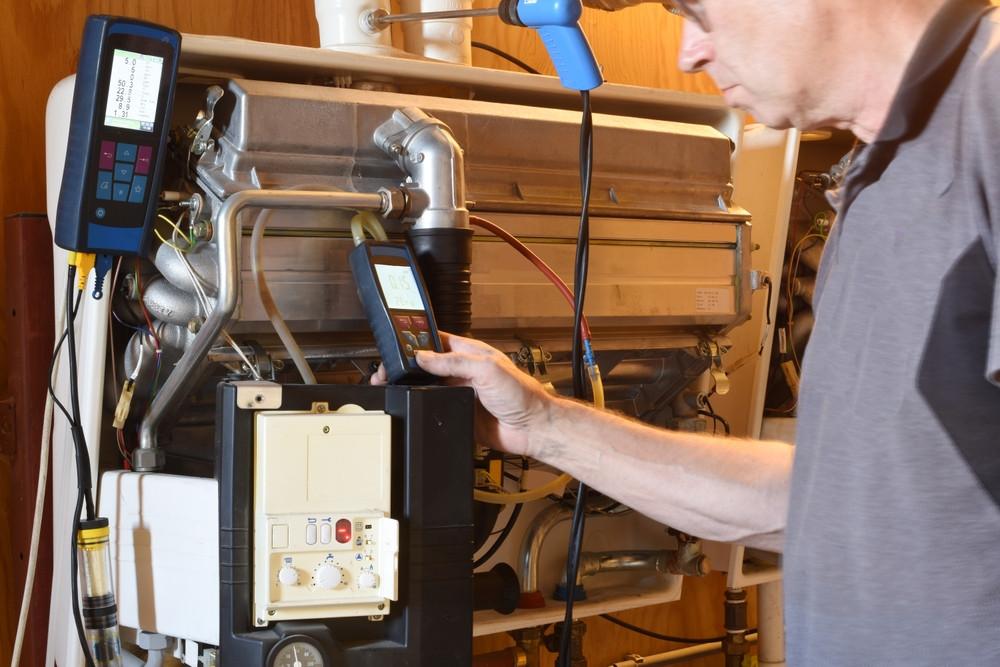
HSE recommends monthly checks at sentinel outlets, with representative outlets monitored on a rotational basis so that the wider system is covered over time.
The monitoring programme should be assessment-driven.
A plant-room reading alone cannot demonstrate that temperatures are satisfactory throughout a complex building.
Detailed monitoring guidance is available in HSE’s hot- and cold-water system guidance.
Control stagnation, little-used outlets and vacant areas
Water turnover matters because stagnation can increase Legionella risk.
Changes in occupancy are therefore directly relevant to water hygiene.
A current outlet and asset register should allow the facilities team to identify:
- regularly used outlets;
- infrequently used outlets;
- areas temporarily out of use;
- redundant sections;
- current flushing requirements; and
- who owns each control task.
HSE recommends a programme of weekly flushing for infrequently used outlets.
The written scheme should specify the procedure and frequency appropriate to the system, with any departure supported by competent assessment.
Flushing is also a controlled task.
HSE advises flushing through and purging to drain without releasing aerosols. Operatives therefore need to follow the agreed procedure rather than simply opening an outlet without considering exposure.
Vacancies and shutdowns should sit within the same control process.
If a floor, suite or building becomes lightly occupied or temporarily vacant, the water-management arrangements should be reviewed promptly.
Depending on the system and duration, measures may include continued flushing, other control arrangements, planned isolation, cleaning or disinfection, and appropriate recommissioning before normal use resumes.
Simply closing a valve does not necessarily remove the stagnation risk associated with redundant pipework.
Any isolation, alteration or removal should be planned by competent people who understand how the change affects the wider system.
HSE recommends avoiding unnecessary dead ends and stagnation, and its technical guidance for hot- and cold-water systems provides further guidance on system design, operation and recommissioning.
Keep tanks, outlets and water-system components in suitable condition
Legionella control is closely connected to planned maintenance.
Cold-water storage tanks, hot-water storage vessels, distribution pipework, showerheads, hoses, TMVs and other components can all influence how effectively the system is controlled.
Cold-water tanks should remain appropriately protected from contamination and inspected in accordance with the control scheme.
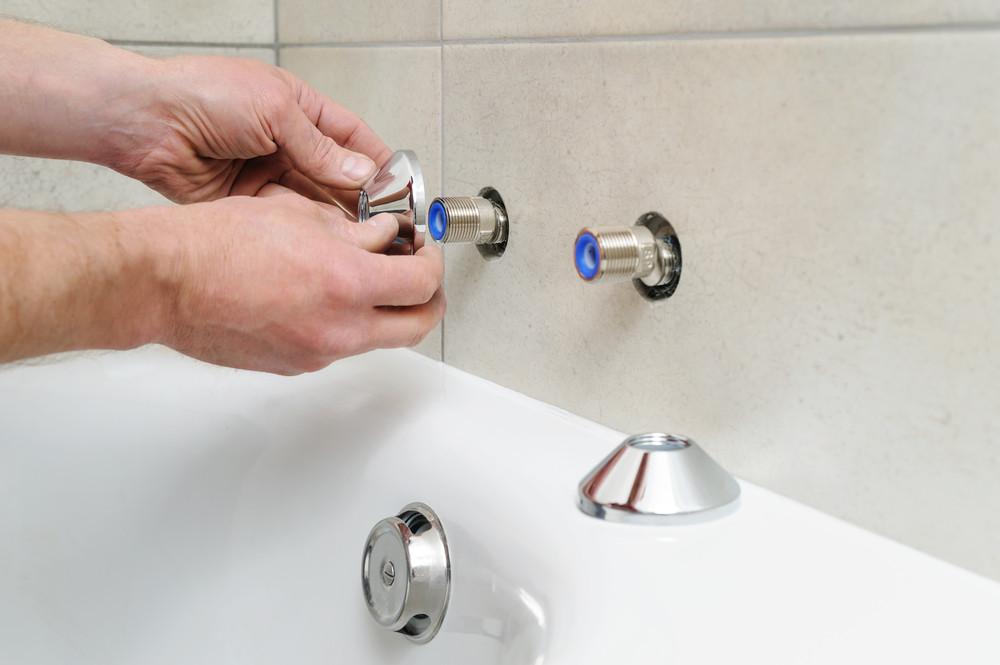
Showerheads and hoses also require attention because they can accumulate scale and contamination while producing aerosols during use.
HSE recommends dismantling, cleaning and descaling showerheads and hoses quarterly or at another frequency determined by the risk assessment.
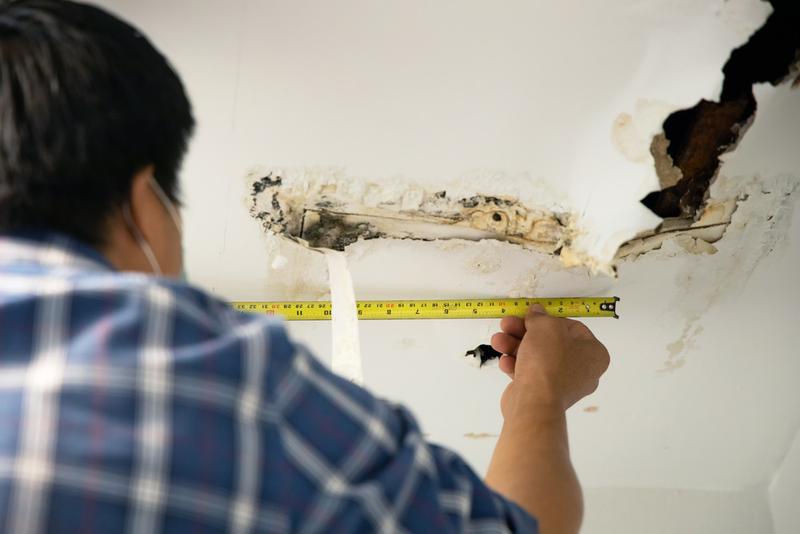
Maintenance issues such as damaged insulation, scale, sediment, corrosion, control problems and poor circulation should not remain isolated engineering observations if they affect the water-hygiene regime.
Precision FM’s Hard FM service includes planned and reactive maintenance and mechanical and electrical services. Where a water-hygiene finding requires maintenance intervention, the relevant remedial work can be incorporated into the agreed maintenance scope, with specialist water-hygiene expertise involved where required.
Monitor controls, investigate exceptions and verify recovery
Monitoring exists to establish whether the control regime is working.
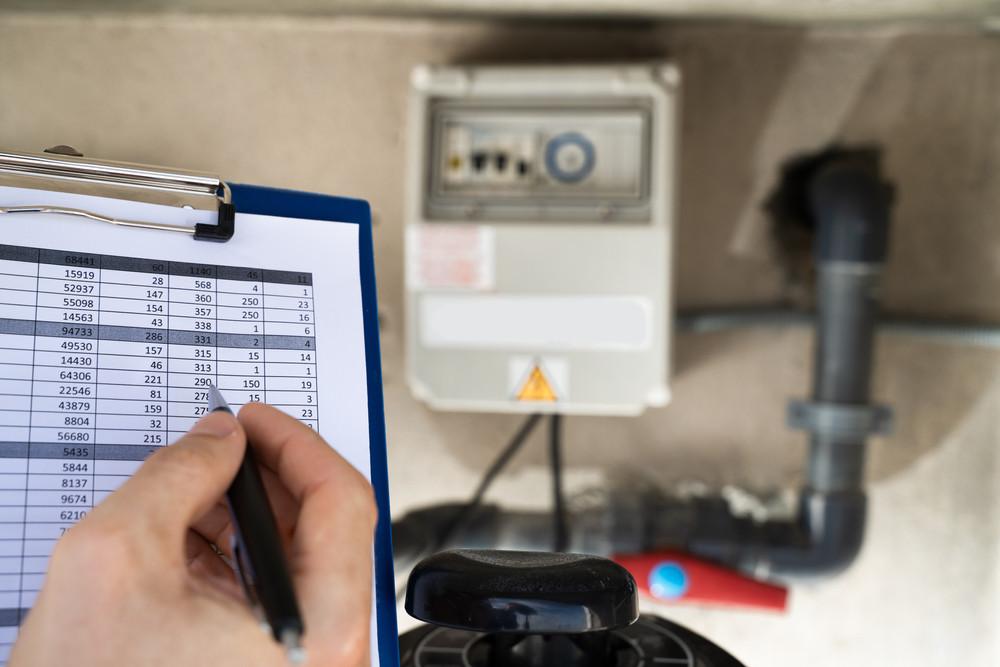
Depending on the written scheme, records may include:
- temperature monitoring;
- flushing activity;
- tank inspections;
- showerhead and hose cleaning;
- cleaning and disinfection;
- maintenance work;
- risk-assessment reviews; and
- corrective actions.
The important part is what happens when a result falls outside the expected control parameters.
A failed check should trigger an appropriate investigation.
For example, an outlet that repeatedly fails to reach the expected hot-water temperature may require investigation by competent personnel. Remedial work might then be identified and completed.
The original exception should not automatically be closed simply because the contractor has finished a job.
Record both the corrective work and the follow-up evidence required by the written scheme to confirm that control has been restored.
The useful management sequence is:
monitor → identify exception → investigate → correct → verify control → close
That distinction matters because completing remedial work and restoring control are separate facts.
The same principle applies where several failed readings indicate a wider system issue. Facilities teams need visibility of the original exception, the resulting investigation, the action taken and the evidence used to demonstrate that the system has returned to the required control condition.
Our guide to auditing building compliance properly discusses the wider principle of tracking compliance findings through to evidenced closure rather than treating documentation alone as proof that a risk has been resolved.
Keep water-hygiene records for the required periods
Records provide evidence of both the control regime and how exceptions have been managed.
For businesses within the relevant statutory scope, HSE distinguishes between different record types.
HSE advises retaining records such as the current risk assessment, responsible persons, the written scheme, and its implementation throughout the period they remain current and for at least two years afterwards.
Records of monitoring inspections, tests and checks should be retained for at least five years.
HSE also notes that the statutory requirement to record significant findings of the risk assessment applies to employers with five or more employees. Smaller employers may not have the same statutory written-record requirement, although HSE still describes keeping appropriate records as useful.
For commercial facilities management, the practical approach is to maintain a documented control regime and retain records in accordance with the applicable requirements.
HSE’s monitoring and record-keeping guidance sets out these periods and requirements in more detail.
Use Legionella sampling for the right reasons
Microbiological testing is not a substitute for controlling the water system.
Routine microbiological sampling for Legionella is not usually required in conventional hot- and cold-water systems where effective control is maintained.
Testing may be appropriate where:
- the risk assessment identifies a need;
- control temperatures or other treatment parameters are not being achieved consistently;
- there is uncertainty about the effectiveness of the control regime;
- areas of low use or other anomalies require investigation; or
- another system-specific reason makes monitoring appropriate.
The requirements are different in some higher-risk environments, including healthcare settings.
Where Legionella testing is required, HSE advises that sampling should follow an appropriate methodology, with samples tested by a UKAS-accredited laboratory participating in an appropriate water-microbiology proficiency-testing scheme.
Competent people should then interpret results in the context of the risk assessment and operating conditions.
HSE’s Legionella testing and monitoring guidance provides further detail.
A negative sample result should not be treated as proof that the entire control regime is effective.
The stronger evidence is a system that remains appropriately assessed, operated, maintained, monitored and corrected when control parameters are missed.
Manage contractor and project changes carefully
Water hygiene frequently crosses several disciplines.
Specialist water-hygiene contractors, plumbing and mechanical maintenance, tenant projects, refurbishment works and compliance management can all affect the same system.
Responsibilities should therefore be defined before work begins.
Clarify who:
- carries out monitoring;
- reviews the results;
- reports exceptions;
- recommends remedial work;
- approves or instructs repairs;
- updates system records;
- reviews the written scheme; and
- confirms restored control.
Competence should be assessed against the work being performed rather than assumed from a generic contractor description.
Building projects also need water-hygiene consideration before handover.
A new kitchenette, shower, altered pipe route or tenant fit-out can change the system’s risk profile.
Drawings, outlet registers, asset information and the written scheme should be updated where the change affects the control regime.
The same applies to changes in occupancy.
Water-system management should form part of the operational response when areas close, reopen or materially change use.
Review exceptions across the estate
Multi-site portfolios benefit from consistent oversight, but each building still needs a control scheme appropriate to its own water system and risk profile.
Central reporting can help identify:
- overdue monitoring;
- missed flushing activities;
- recurring temperature exceptions;
- outstanding remedial work;
- failed verification checks;
- buildings affected by significant occupancy changes;
- repeated contractor recommendations; and
- locations where the same control repeatedly falls outside its expected range.
Headline completion percentages should not hide significant exceptions.
A portfolio may show high monitoring compliance while one building has persistent temperature failures or unresolved actions.
Those issues need to remain visible.
Significant exceptions should be acted on when they arise. The portfolio review provides the additional opportunity to identify recurring patterns, challenge unresolved actions and make sure local problems are not being treated in isolation.
Keep Legionella control aligned with the live building
Effective Legionella control depends on implementing the full site-specific scheme and checking that it remains effective as the building changes.
That means reassessing when occupancy changes, investigating exceptions, carrying out appropriate corrective work and demonstrating that control has been restored before the issue is closed.
The practical test is:
Can the facilities team show that the water system is under control, identify where it is not, and demonstrate who owns the corrective action through to verified closure?
Need stronger oversight of water hygiene and building compliance?
Precision FM supports commercial organisations through Hard FM services, maintenance coordination and wider facilities-management oversight.
If water-hygiene actions, maintenance records or compliance responsibilities are fragmented across multiple contractors or sites, talk to Precision FM about a more coordinated approach to managing your estate.