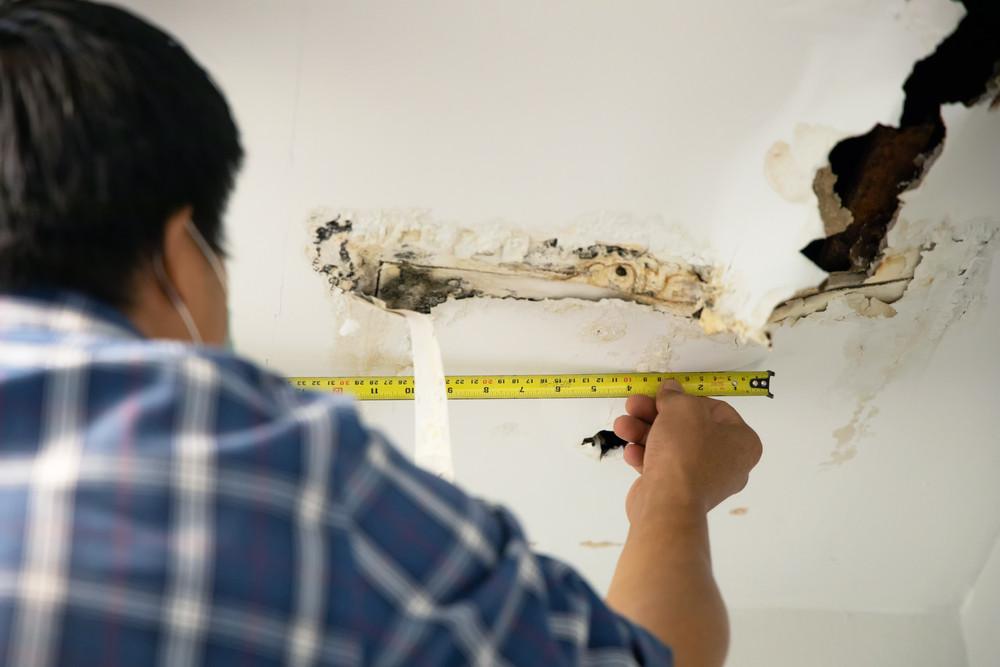
A facilities manager receives a report of water coming through a ceiling above an occupied office.
The immediate question is not simply how quickly someone can attend.
Can the affected area be controlled? Is the leak worsening? Who needs to respond? What temporary measures are required? When can the space return to normal use? Who owns communication while the incident remains open?
Those questions expose a weakness in many reactive maintenance contracts:
response time is treated as one number when the building experiences several different stages of response.
For commercial premises, response targets should specify both the priority of the incident and the milestone being measured.
A two-hour attendance commitment, for example, says nothing on its own about when the hazard will be controlled or the service restored.
An effective framework therefore needs to match urgency to actual risk, clearly define the stages of response, and keep ownership visible until the incident is fully resolved.
How Reactive Maintenance Response Times Should Be Measured
A useful reactive maintenance agreement should distinguish between the different points in an incident.
| Milestone | What it means |
|---|---|
| Acknowledgement | The report has been received and recorded. If triage has a separate target, measure that separately rather than assuming acknowledgement means assessment is complete. |
| Attendance | An appropriately equipped and competent person has reached the affected location and can begin the intended response. |
| Make-safe | The immediate hazard or risk of further deterioration has been controlled. This may sometimes occur before contractor attendance through an authorised site response. |
| Restoration | The affected service or area has returned to an agreed level of usable operation. Temporary restoration may still carry restrictions. |
| Final completion | Permanent work, required evidence and associated follow-up actions have been completed and the incident is ready for final closure. |
These are separate milestones, not a mandatory sequence.
Record each when it occurs, and distinguish temporary restoration from unrestricted service.
An illustrative water-leak incident shows why that matters.
The report may first be received and triaged. The affected office area may then be restricted while an appropriate person investigates and isolates the source. The space may later be assessed and returned to use when suitable, while ceiling finishes or other fabric repairs remain outstanding.
Attendance, control, restoration and final completion may therefore occur at different times.
A single “response time” cannot describe the whole incident accurately.
Set priorities through consequence-based triage
Priority should reflect the consequence of the fault rather than the asset name alone.
A practical model may use categories such as:
| Priority | Basis for classification | What the agreement needs to establish |
|---|---|---|
| Emergency | Immediate danger, escalating damage or critical interruption | Immediate escalation, appropriate protective action and emergency attendance arrangements |
| Urgent | Significant disruption or a fault likely to worsen | Attendance and recovery expectations, interim arrangements and update requirements |
| Routine | Lower-consequence defects | An agreed completion deadline and escalation if circumstances change |
These are proposed categories rather than universal industry timings. The definitions and targets should be agreed for the estate.

A loss of cooling in a normal meeting room may be inconvenient.
The same technical fault affecting a server room, laboratory or temperature-sensitive environment could have a very different consequence.
The same applies to facilities.
A blocked toilet at a large office with substantial alternative provision may be urgent but manageable. The same fault could become much more significant if it removes the only accessible WC.
Good triage therefore asks what has happened and what the consequence is at that site.
The helpdesk should establish:
- what has failed;
- where the issue is located;
- whether anybody is at immediate risk;
- whether water, electricity, security or another building service is affected;
- whether deterioration is continuing;
- what temporary action has already been taken;
- whether specialist competence is likely to be required;
- what access or permit arrangements apply; and
- who is available on site.
Priority should also be reassessed when conditions change, new information becomes available or an interim control is no longer effective.
An initially minor leak can worsen.
An alternative facility can become unavailable.
A temporary workaround can fail.
The first priority assigned to a job should not become permanent merely because it was recorded first.
Where an incident presents immediate danger, follow the relevant site emergency procedure. A maintenance attendance target is not a reason to delay an appropriate emergency response.
Match service level agreement targets and coverage to operational risk
Very short attendance commitments have consequences for the operating model.
A service level agreement (SLA) may require extended geographic coverage, standby engineers, specialist availability, greater call-out capacity or increased parts holdings.
Those provisions may be entirely appropriate for critical environments.
They are not automatically necessary for every fault across every commercial building.
Response commitments should reflect:
- safety consequence;
- risk of further damage;
- business criticality;
- operating hours;
- availability of alternative facilities;
- site location;
- specialist requirements; and
- the organisation’s tolerance for disruption.
The purpose of the SLA is to put the strongest response commitment where delay creates the greatest operational consequence.
That also means distinguishing service availability from job-specific attendance commitments.
A provider may operate a 24-hour helpdesk or reactive service while individual attendance and recovery targets still vary by location, priority and trade.
Write clear SLA clock, pause and closure rules
An SLA should define much more than target hours.
It needs to explain how performance is measured.
For every relevant milestone, the agreement should state:
- when the clock starts;
- whether time is measured in calendar hours or working hours;
- what legitimately pauses the clock;
- who may authorise a pause;
- how the pause reason is recorded;
- when the clock restarts;
- who may change the incident priority;
- how a priority change is documented;
- how linked contractor jobs remain connected to the original incident;
- how reopened faults are recorded; and
- what evidence is required before final closure.
Keep the original reporting timestamp and total elapsed incident time visible.
Record service unavailability separately, including when it began and when service was restored.
For every contractual pause, record:
- why it occurred;
- who authorised it;
- when it started;
- when it ended; and
- who owns the next action.
This creates an important distinction between contractual performance and the disruption experienced by the building.
Where the contract expressly permits it, an SLA clock may pause for a recorded dependency such as client approval, unavailable specialist parts or restricted access. The incident remains open and actively managed.
That pause may affect whether the supplier has technically breached the SLA.
It does not erase the underlying incident or any service unavailability.
Transferring, pausing or reopening work should never erase the incident history.
Escalate changing risks and manage temporary restoration
Escalation should begin when an important commitment is at risk rather than after the SLA has already been missed.
For a significant incident, the facilities team should know:
- what has happened;
- what current control is in place;
- whether the priority has changed;
- what dependency is preventing recovery;
- who owns the next action;
- what the expected recovery position is; and
- when the next update will be issued.
Where recovery time cannot yet be estimated reliably, state the dependency and when a revised estimate will be provided.
Temporary restoration also needs active management.

A workaround may return part of a building to use while the permanent repair remains outstanding.
Where that happens, record any operating restrictions, the owner of the temporary arrangement, its review point and the route to permanent completion.
A temporary measure should not become invisible merely because the immediate disruption has reduced.
The same applies to make-safe actions.
Controlling the immediate risk may be the correct first response, but it is not the same as completing the repair.
Remove avoidable delays before incidents occur
Many poor reactive responses are slowed by problems that existed before the fault was reported.
These include:
- outdated contact details;
- incomplete asset records;
- unclear landlord and occupier responsibilities;
- restricted plant access;
- unknown isolation points;
- missing permit information; and
- uncertainty over specialist or warranty arrangements.
Site information should therefore include appropriate emergency contacts, access instructions, critical asset data, isolation information, relevant drawings where available, permit requirements and specialist contractor details.
Where specialist contractors are involved, the client still needs appropriate arrangements for contractor selection, information sharing, cooperation, supervision and site-specific risk information. The HSE’s guidance on using contractors sets out those responsibilities in more detail.
For multi-site portfolios, maintaining that information centrally becomes especially important.
A computer-aided facilities management (CAFM) system can help by linking reactive jobs with asset history, planned maintenance and previous faults. Precision FM’s guide to FM-managed CAFM systems explains how maintenance history can support visibility of recurring issues and asset performance.
The operational benefit is straightforward.
If the helpdesk can see that an asset has failed repeatedly, the response may need to change from another isolated call-out to a wider technical review.
Measure recovery and investigate exceptions
A key performance indicator (KPI) should help facilities teams understand whether the service is controlling disruption.
Headline percentages alone are not enough.
A report showing 98% attendance compliance is difficult to interpret without knowing:
- how many jobs that percentage represents;
- which priority categories were involved;
- what happened in the missed cases;
- how long restoration took; and
- whether significant jobs remained open afterwards.
Useful reporting should therefore show:
- actual job numbers alongside percentages;
- results by priority;
- significant misses individually;
- total elapsed incident time;
- contract-adjusted SLA time;
- service-unavailability duration where relevant;
- time to make safe;
- time to restoration;
- time to final completion;
- open and overdue work;
- repeat attendance;
- reopened jobs; and
- the reasons for missed commitments.
First-time fix can also be useful, but it should be interpreted carefully.
A planned investigation followed by a scheduled specialist repair is not necessarily poor performance.
That is different from avoidable repeat attendance caused by incorrect diagnosis, insufficient information or the wrong resource being dispatched.
The metric should distinguish between the two.
Significant incidents and missed critical commitments should be reviewed promptly.
The monthly or portfolio review serves a different purpose: identifying repeated patterns, systemic issues and longer-term opportunities for improvement.

Compare performance consistently across sites
Multi-site reporting only works when the underlying definitions are consistent.
One building may appear to generate more emergencies because its local team classifies routine defects at too high a priority.
Another may appear to have strong completion performance because jobs are closed at temporary restoration rather than after permanent work.
Agree on common definitions for:
- priority;
- acknowledgement;
- triage;
- attendance;
- make-safe;
- restoration;
- final completion;
- paused work;
- reopened work; and
- repeat faults.
Raw job numbers also need context.
A heavily occupied head office with complex plant is not directly comparable with a small regional office simply because both are part of the same estate.
Look at building use, asset criticality, operating hours and workload alongside headline KPIs.
That allows facilities teams to distinguish between genuinely poor service and a site that simply carries more operational demand.
Use repeat faults to improve planned maintenance
Reactive maintenance should not be managed separately from the planned maintenance strategy.
Unexpected failures will always occur.
But repeated reactive work is useful evidence.
If the same pump, air-conditioning unit, door system or electrical component generates recurring incidents, facilities teams should ask whether another repair remains the right answer.
Maintenance history can help identify:
- recurring defects;
- assets with increasing reactive demand;
- repeated temporary fixes;
- components approaching replacement; and
- planned maintenance that may need adjustment.
The point is not to eliminate reactive work entirely.
It is to use reactive history to improve the next maintenance decision.
Make accountability visible until closure
A well-managed reactive service makes status, ownership and next steps clear.
The facilities team can see the incident priority, the controls currently in place, who owns the next action, the expected recovery position and when another update is due.
Engineers receive useful information before attendance.
Building teams have a clear route for communication.
Management can distinguish contractual attendance performance from actual restoration and final completion.
Precision FM describes a 24/7 in-house responsive Hard FM service alongside planned and reactive maintenance support. Attendance, escalation and recovery arrangements should still be agreed against the client’s sites, service scope and operational requirements.
The strongest reactive-maintenance framework is therefore not the one with the most aggressive number beside every priority.
It is the one that makes risk, timing, ownership and recovery visible throughout the incident.
The practical test is:
For any open incident, can the facilities team identify its priority, current controls, accountable owner, expected recovery time and next update?
Need a more controlled approach to reactive maintenance?
Precision FM supports commercial organisations through planned and reactive Hard FM services, maintenance coordination and CAFM-supported service management.
If reactive jobs are being delayed by unclear priorities, fragmented contractors or poor visibility between attendance and completion, talk to Precision FM about a more coordinated maintenance approach.